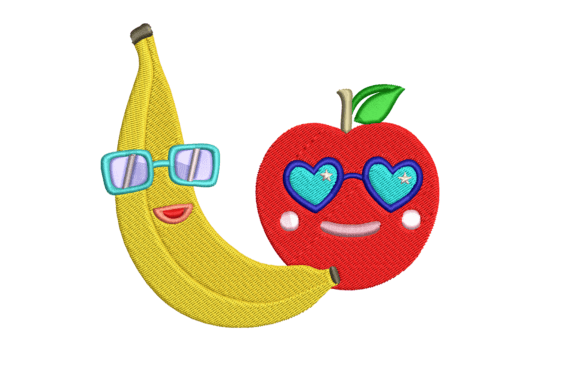
Funny Fruits: A Designer's Honest Review for Real Projects
When I first opened the Funny Fruits file, my initial reaction wasn't about the technical specs or the stitch count. It was about the mood. There is a specific energy that comes from a well-conceived fruit motif in embroidery—it screams approachability, freshness, and a touch of whimsy. As someone who has stitched hundreds of designs for client projects and my own handmade shop, I know that not every "cute" design translates well to the hoop. Some look great on a screen but fall apart under the needle. This review looks at how Funny Fruits actually performs when you take it out of the digital realm and into a real-world application.
The First Stitch: Visual Personality and Layout
The design immediately establishes itself as a playful piece of art. In the world of machine embroidery design, layout is everything. Funny Fruits avoids the cluttered look that often plagues food-themed graphics. Instead, it feels balanced, with shapes that seem to invite the eye to wander across the composition. The visual personality suggests a project that is meant to bring a smile, whether it is a custom gift or a boutique item.
I imagine this design sitting perfectly centered on a white apron in a home kitchen or perhaps on the chest of a child's summer dress. The shapes are distinct enough to hold their form even after washing, which is a critical factor for any designer evaluating a new asset. It strikes a balance between detailed enough to be interesting and simple enough to remain legible on smaller items like caps or baby bibs. It doesn't try to be high-art; it aims to be charming, and that is exactly where its strength lies.
Real-World Scenarios: From Scrap Fabric to Finished Product
Let's talk about the practical side. I recently tested a similar concept on a tote bag for a local craft fair, and the results were telling. If you apply Funny Fruits to a canvas tote, the vibrant potential of the theme really shines. The contrast between the fabric texture and the smooth satin stitches creates a tactile appeal that customers love to touch. It elevates a basic canvas bag into a statement piece without looking over-stitched.
Consider a scenario where you are preparing personalized gifts for the holidays. A set of embroidered tea towels featuring this design would make a delightful hostess gift. The theme fits naturally in a kitchen setting, adding a splash of color and humor to everyday items. However, if you plan to use this for sweatshirt embroidery, you need to be mindful of the drape. On a thick cotton blend, the design might feel slightly stiff if the fill density is too high, so testing on scrap material is non-negotiable.
For those selling on Etsy or running a small shop, this design offers versatility. It works beautifully as a custom apparel element for kids' clothing, where durability and softness are paramount. You could also adapt it for a nursery wall hanging or a pillow cover, turning a simple textile into a focal point of a room. The key is understanding that this isn't just a graphic; it is a digital embroidery file that requires thoughtful execution to become a premium handmade product.
Where to Exercise Caution
No design is a universal fit, and Funny Fruits is no exception. While it is robust, there are specific situations where you should proceed with care. If you are working with a very small hoop size, such as 4x4 inches, pay close attention to the smallest details within the fruit shapes. Tiny elements can sometimes get lost or merge together if the resolution isn't perfect or if the fabric shifts during stitching.
Textured fabrics present another challenge. On a heavily textured linen or a boucle wool, the definition of the design might be obscured. Similarly, stretchy fabrics like jersey require a stabilizer strategy that prevents puckering. If the design includes dense areas of fill stitch, using the wrong type of backing can lead to a stiff, uncomfortable finished product that might cause issues with wearability.
Dark fabrics also demand a strategic approach. While the design likely includes outlines or background fills to ensure visibility, you must verify the thread colors against your specific fabric choice. A light-colored fruit on a dark shirt needs sufficient coverage to pop, while a dark fruit on black might disappear entirely unless a contrasting outline is used. Always test your thread colors before committing to a bulk order of materials.
Impact on Brand Value and Customer Trust
In the competitive world of craft business, the quality of your embroidery speaks volumes about your brand. A clean, well-executed embroidery project builds trust. When a customer receives a personalized gift that features crisp lines and consistent stitch density, they perceive higher value. Conversely, loose threads or misaligned elements can undermine the professionalism of your work.
Funny Fruits, when executed correctly, enhances the perceived value of your items. It adds a layer of charm that makes the product feel unique and thoughtfully designed. For an Etsy seller, this means better engagement and potentially higher conversion rates. The design acts as a visual hook in your printable mockups, drawing the buyer in before they even see the physical item. It signals that you care about aesthetics and detail, which are crucial for building a loyal customer base.
Practical Designer Notes for Success
Before you start stitching, here are a few essential steps to ensure your finished product meets professional standards. First and foremost, always test the design on scrap fabric that matches your final project in weight and texture. This allows you to catch any issues with hoop size or tension early on.
Check your stabilizer choices carefully. Heavier designs may require cut-away stabilizers for stability, while lighter ones might do fine with tear-away. Inspect the small details in the design files to ensure they are large enough to stitch clearly. If you are unsure about the file formats or compatibility with your machine, consult the documentation provided by the creator. Do not assume a design will work on all machines without verification.
Review the design in black and white mockups to check for contrast issues. Sometimes colors look fine on a monitor but fail to separate properly once stitched. Also, consider the end-use of the item. If it is for a garment that will be washed frequently, ensure the design is secure and won't snag. Finally, confirm the licensing terms if you intend to sell finished items or use the design as part of a larger commercial collection. Understanding these legalities protects your small shop product line.
Final Thoughts on the Design's Potential
Funny Fruits is more than just a decorative element; it is a versatile tool for creative entrepreneurs and hobbyists alike. Its ability to convey joy and simplicity makes it a strong candidate for a wide range of applications, from kitchen towels to boutique branding. By paying attention to the nuances of fabric selection, stabilizer usage, and thread contrast, you can transform this digital asset into a stunning physical reality.
Whether you are creating a one-off gift or building a catalog of design assets for your store, this design offers a solid foundation. It invites creativity and encourages experimentation. With a bit of practice and careful planning, Funny Fruits can become a signature element in your portfolio, helping you stand out in a crowded market of handmade goods.