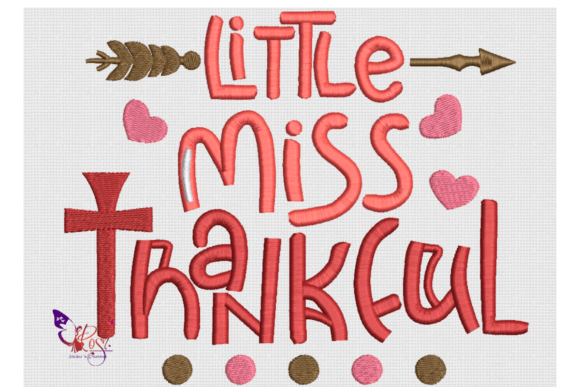
Lil Miss Thankful Design Review for Small Business
As an experienced embroidery designer who has spent years refining designs for commercial use, I approach every new digital file with a critical eye. When evaluating a product like Lil Miss Thankful, I am not just looking at the aesthetic appeal; I am analyzing its viability as a tool for brand building and merchandise creation. The description paints a picture of something lovely and playful, featuring a cute quote accompanied by colorful hearts, dots, and a single arrow. While the text explicitly notes it is perfect for kids, my assessment focuses on how this design translates to professional small business applications, from branded patches to custom apparel.
First Impressions: Personality and Brand Fit
The initial visual language of Lil Miss Thankful suggests a friendly, approachable, and slightly whimsical personality. It does not scream corporate rigidity or high-end luxury; instead, it exudes a handmade charm that resonates well with boutique owners, creative studios, and artisanal brands. The inclusion of hearts and dots implies warmth and gratitude, making it an ideal candidate for businesses that want to project a sense of community and care.
For a bakery, florist, or pet brand, this design offers a soft entry point into customer engagement. It feels less like a logo and more like a personal note stitched onto fabric. However, the "playful" nature requires careful consideration. If your brand identity relies on sleek minimalism or industrial toughness, this design might clash. But for Etsy sellers, craft businesses, and shops selling handmade products, the vibe aligns perfectly with the expectation of authenticity and personal touch.
Real-World Application in Commercial Merchandise
In the context of real business scenarios, Lil Miss Thankful shines when used as a secondary accent rather than a primary logo. Imagine a local café launching a Thanksgiving-themed promotion. Instead of a generic turkey motif, staff could wear aprons embroidered with this design. The combination of the quote and the arrow creates a narrative of direction and appreciation, which customers respond to positively.
For small business merch creators, this design is versatile enough for tote bags and cap embroidery. A tote bag featuring the colorful hearts and dots can serve as a walking advertisement for a boutique. Similarly, adding it to the sleeve of a work shirt or the chest pocket of a uniform adds a layer of character without overwhelming the garment. It transforms standard workwear into a branded experience that feels curated and thoughtful.
When considering embroidered patches, this design offers excellent potential. A patch version of Lil Miss Thankful can be sewn onto denim jackets, backpacks, or even product packaging accents. For a craft business, attaching these patches to gift boxes elevates the unboxing experience, signaling to the buyer that attention was paid to detail. This level of customization fosters customer trust and recognition, turning a simple transaction into a memorable interaction.
Strategic Limitations and Where to Exercise Caution
While the design is charming, there are specific constraints that must be managed during production. The description mentions "colorful hearts, dots, and one arrow," which implies a certain level of detail. In the world of machine embroidery, detail often battles against size. If you attempt to stitch this design too small, such as on a tiny label or a very small patch, the hearts and dots may merge, losing their definition and creating a muddy appearance.
Curved surfaces like cap fronts present another challenge. Embroidering a design with multiple elements and varied spacing on a curved surface requires precise digitizing to ensure the lettering remains legible and the graphics do not distort. Furthermore, high stitch density can make the fabric stiff. If you are using this on delicate fabrics or items that require frequent washing, the density might cause puckering or premature thread breakage.
Dark uniforms also pose a risk. Unless the design utilizes a heavy underlay or dense fill stitches, light-colored threads might not pop against dark backgrounds, diminishing the impact of the colorful hearts. Always test on the actual fabric texture before committing to a full run. If the fabric is highly textured, such as a rough canvas or bouclé, the fine details of the dots and the arrow may get lost in the weave.
Impact on Brand Identity and Professionalism
The decision to use Lil Miss Thankful directly influences your brand's perceived value. A consistent application of this design across all assets—from digital mockups to physical finished products—creates a cohesive visual identity. It tells the story of a brand that values gratitude and playfulness. This consistency is crucial for buyer engagement; customers are more likely to return to a brand that looks polished and intentional.
However, professionalism in embroidery is about execution as much as design. A poorly stitched version of a cute design can look cheap. Therefore, the quality of the embroidery file and the skill of the operator are paramount. When used correctly, this design enhances the perceived value of the item, making a $5 tote bag feel like a premium gift. It bridges the gap between mass-produced goods and truly handmade products.
Practical Designer Notes for Production
Before integrating Lil Miss Thankful into your commercial workflow, follow these essential steps to ensure a successful outcome. First, always test the design in black and white. This removes the distraction of color and allows you to see if the composition holds up structurally. If the design falls apart without color, it will struggle in production.
Review the thread color contrast carefully. Ensure that the hearts and dots provide enough visual weight against the background fabric. Inspect the spacing between elements; crowded elements can lead to thread breaks, while overly spaced elements can look disjointed. Confirm the hoop size requirements early in the process to avoid scaling issues that alter the aspect ratio of the arrow and text.
Use proper stabilizer for every project. The type of stabilizer (cut-away vs. tear-away) depends heavily on the fabric texture and the intended use of the garment. For items like caps or aprons that undergo stress, a cut-away stabilizer provides necessary support. Create a printable mockup for client approval before stitching any physical samples. This allows stakeholders to visualize the final result and catch potential errors in layout or sizing.
Finally, compare this design asset beside other design assets in your library. Does it fit the existing style guide? Is it distinct enough from your current branding? And most importantly, confirm the commercial licensing terms. Just because you own the digital embroidery file does not automatically grant you the right to sell thousands of units bearing the design. Verify the license to protect your business from legal complications.
If specific technical details like exact stitch count or file formats were not provided in the product listing, you must request them from the vendor. Do not guess. The success of your commercial embroidery projects depends on having accurate data to optimize the machine embroidery design for your specific equipment and materials.
In conclusion, Lil Miss Thankful is a strong contender for small business merchandise, particularly for brands targeting families, children, or those wanting to inject warmth into their offerings. By respecting its limitations and following rigorous testing protocols, you can turn this playful design into a powerful tool for brand growth and customer connection.